Saturn Return and Sade Sati: What to Expect and How to Navigate It
T
Trinergy
Saturn Return and Sade Sati are among the most significant and often challenging astrological periods in a person's life. This guide explains what they are, when they happen, and how to work with them rather than against them.
Saturn: The Great Teacher
No planet in astrology — Vedic or Western — commands the same combination of respect, apprehension, and ultimately profound gratitude as Saturn. Called Shani in Sanskrit (from the root meaning "slow mover"), Saturn takes approximately 29.5 years to complete one orbit of the Sun. It governs time, karma, discipline, limitation, and the kind of deep maturation that only sustained effort and genuine humility can produce.
Two Saturn-related astrological phenomena stand out as particularly significant turning points in a person's life: the Saturn Return (used primarily in Western and modern Vedic astrology) and Sade Sati (a classical Jyotish concept). Both represent extended periods of Saturnine influence — and both have earned somewhat fearful reputations that, properly understood, are more instructive than alarming.
What Is Saturn Return?
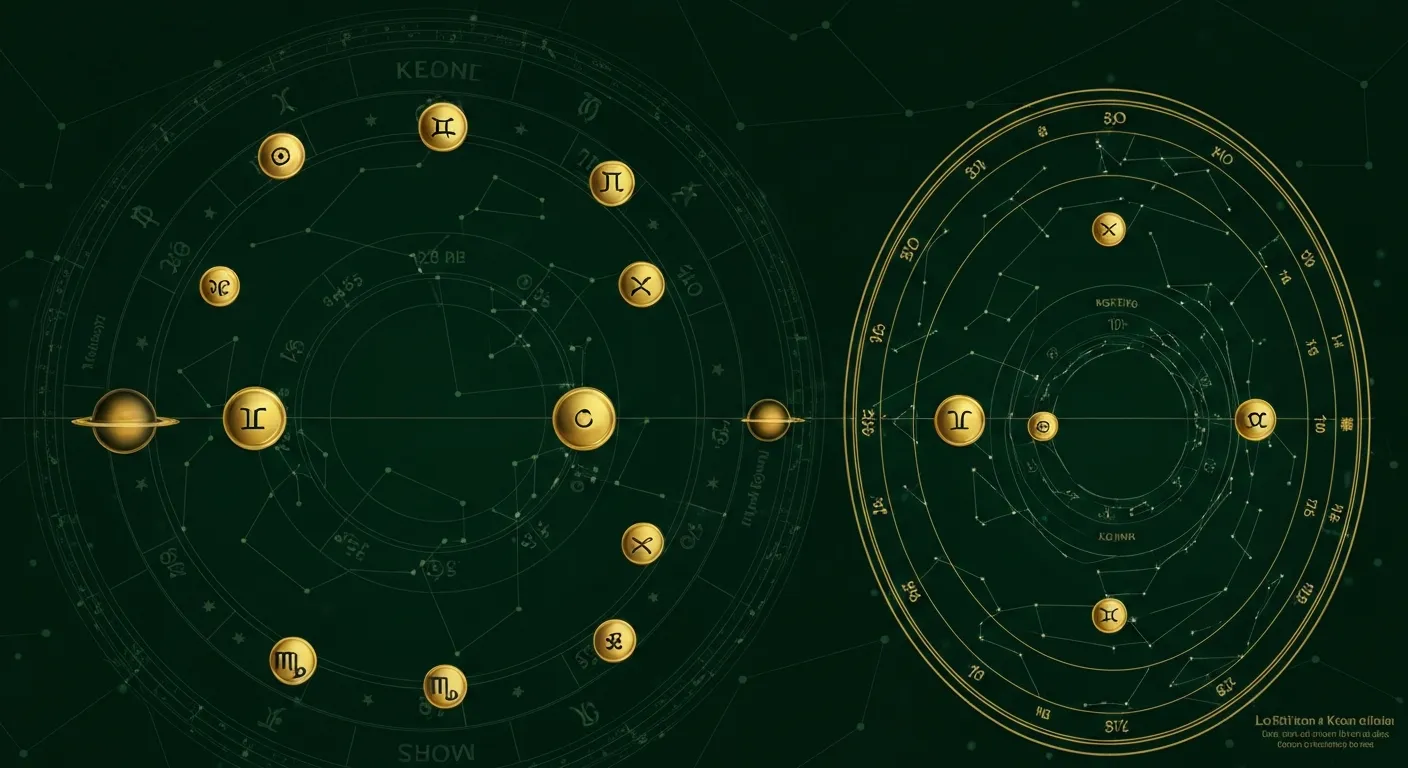
The Saturn Return occurs when Saturn completes its full 29.5-year cycle and returns to the exact position it occupied at the moment of your birth. Most people experience two or three Saturn Returns in a lifetime:
- ◆First Saturn Return: Approximately ages 28-30. The transition from youth to full adulthood.
- ◆Second Saturn Return: Approximately ages 57-60. The transition into genuine elderhood and legacy-consciousness.
- ◆Third Saturn Return: Approximately ages 86-90. Rare but experienced by those with long lives.
The first Saturn Return is the one most commonly discussed and most universally felt. In the years approaching your 29th birthday and through your early thirties, Saturn's return to its natal position creates a period of reckoning. Structures built on unstable foundations — relationships, careers, living situations, self-concepts — come under pressure. What is genuinely aligned with your authentic path tends to survive and strengthen; what is not tends to require change or release.
Common experiences during the first Saturn Return include: - A career reassessment or significant professional transition - Relationship changes — either deepening of a committed partnership or the end of one that was not truly right - A shift in where you live, often involving a move toward greater independence or responsibility - A confrontation with your own avoidance patterns, limitations, or immaturities - A growing sense of what truly matters versus what was inherited from family or social expectation without genuine examination
Saturn Return is not punishment. It is Saturn fulfilling its function as the great teacher and structure-builder of the cosmos — demanding that you step fully into the life that is genuinely yours.
What Is Sade Sati?
Sade Sati is a classical Vedic astrology concept describing a period of approximately seven and a half years (saade saati in Hindi literally means "seven and a half") during which Saturn transits through three consecutive signs of the zodiac that include and surround your natal Moon sign.
Specifically, Sade Sati begins when Saturn enters the sign immediately before your Moon sign, reaches its peak when Saturn transits your Moon sign itself, and concludes when Saturn moves through the sign immediately after your Moon sign. Because Saturn spends approximately 2.5 years in each sign, the entire transit covers 7.5 years.
For example, if your natal Moon is in Libra: - Sade Sati begins when Saturn enters Virgo (the sign before Libra) - Peaks when Saturn transits Libra itself - Concludes when Saturn exits Scorpio (the sign after Libra)
Because Saturn takes 29.5 years to circle the zodiac, most people experience two to three Sade Sati periods in a lifetime — one in youth or early adulthood, one in mid-life, and potentially one in later years.
What to Expect During Sade Sati
Sade Sati's reputation as a difficult period is not entirely unfounded — but it is significantly nuanced. The experience varies enormously based on several factors:
Saturn's placement in your natal chart: If Saturn is well-placed at birth (in its own signs of Capricorn or Aquarius, exalted in Libra, or in the 3rd, 6th, 10th, or 11th house), Sade Sati tends to be more manageable and even productive. If Saturn is challenged at birth (debilitated in Aries, or in challenging houses), the transit can be more pronounced.
Your Moon sign's relationship with Saturn: Saturn is naturally friendly to certain signs and more challenging in others. A Moon in Libra (where Saturn is exalted) experiences Sade Sati very differently from a Moon in Aries (where Saturn is debilitated).
Your current Mahadasha: If you are simultaneously in a Saturn, Rahu, or Ketu Mahadasha during Sade Sati, the Saturn influence is intensified. If you are in a Jupiter or Venus Mahadasha, the benefic planetary period can significantly cushion the transit's effects.
Common themes during Sade Sati include: - Increased responsibilities and workload - Health concerns, particularly related to Saturn-ruled areas (bones, teeth, joints, chronic conditions) - Financial caution or reduced income flow - Relationship changes — separations, family challenges, or the loss of significant relationships through death - A general sense of being tested, slowed down, or burdened - Psychological introspection and a confrontation with fears, self-doubt, or patterns of avoidance
However, Sade Sati also produces remarkable outcomes for many people: - Significant career achievements built on sustained effort - Deep wisdom and spiritual growth - The clearing of old debts — karmic and financial - The establishment of genuinely durable foundations - A maturity and gravitas that becomes the platform for the next phase of life
Remedies for Saturn: Working With the Energy
Vedic astrology offers a range of remedies for Saturn periods that work by honouring the planet's energy rather than trying to resist it. The most effective remedies are those that embody Saturn's virtues — discipline, service, humility, and consistency:
Service: Saturn governs the working class, the elderly, and those who suffer. Consistent, genuine service to those in need — not as a one-time gesture but as a regular practice — is one of the most powerful Saturn remedies. Volunteering at a food bank, supporting elderly relatives, or contributing to community infrastructure all resonate with Saturnine energy.
Discipline and routine: Saturn responds to regularity. Establishing a consistent daily routine — fixed sleep times, regular physical exercise, disciplined work habits — aligns with Saturn's essential nature and reduces the friction of the transit.
Saturday observances: Saturday is Saturn's day. Simple observances — reduced consumption, fasting (particularly from oils and salts), wearing blue or black, donating to the poor — are traditional Saturn practices on Saturdays during Sade Sati.
Shani mantra: The recitation of Saturn's mantra — Om Shanaischaraya Namah or the longer Shani Beej mantra — during Saturn hours (typically on Saturdays) is a widely used energetic practice. Consistency matters more than intensity.
Sesame (til) and iron: Donating sesame seeds and black lentils (urad dal) on Saturdays, and using iron vessels, are traditional Saturn remedies in Vedic practice.
Turning Challenges Into Growth
The essential reframe that transforms the experience of both Saturn Return and Sade Sati is this: Saturn is not taking things away from you arbitrarily. It is removing what does not belong in the life you are building — and demanding that what remains is built on genuine foundations rather than convenient illusions.
The people who emerge from Saturn periods most powerfully are those who engage consciously with what the period is asking of them. They take stock honestly. They do the difficult work they have been avoiding. They reduce rather than expand, consolidate rather than scatter, and choose integrity over convenience even when it is costly in the short term.
At Trinergy, our Vedic astrology consultations examine your Saturn placement, your current transit picture, and your Dasha sequence to give you a precise understanding of where you are in your Saturn cycle, what the specific demands of this period are for you personally, and what combination of remedies and strategic choices is most likely to support you in navigating it well.
Unlock Your Celestial Blueprint
A personalised Vedic Astrology reading reveals your karma, timing, and the cosmic forces shaping your destiny.