Vedic astrology — or Jyotish — is one of the oldest astrological systems in the world. This beginner's guide explains its history, how it differs from Western astrology, the 12 houses, 9 planets, and why it remains profoundly relevant today.
The Ancient Science of Light
Vedic astrology — known in Sanskrit as Jyotish, meaning "science of light" — is one of humanity's oldest continuously practised systems of knowledge. Its roots extend into the Vedic civilisation of the Indian subcontinent, with references to astrological observation found in the Rigveda, estimated at between 4,000 and 6,000 years old. It is one of the six Vedangas — the limbs of the Vedas — traditionally classified as a sacred auxiliary science alongside grammar, ritual procedure, phonetics, metrics, and etymology.
The term "science of light" is significant. Jyotish is not merely about the positions of celestial bodies; it is about the quality of light — solar, lunar, and planetary — and how that quality of light influences consciousness, time, and the unfolding of individual destiny. In the Vedic worldview, the cosmos is not a random collection of matter but an intelligently ordered system of correspondences, and the movements of the planets are among the most accessible expressions of those correspondences.
Today, Jyotish is practised by millions of people across South Asia, the South Asian diaspora, and an increasingly global community of students and practitioners who find its insights remarkably precise and practically useful.
How Vedic Astrology Differs From Western Astrology
Most people in the West encounter astrology through the tropical system — Sun signs, horoscope columns in newspapers and magazines, and the familiar Aries-to-Pisces cycle that begins with the spring equinox. Vedic astrology and Western astrology share the same twelve-sign zodiac and many of the same planet names, but they differ fundamentally in their astronomical basis, their primary reference points, and their interpretive frameworks.
Sidereal vs Tropical Zodiac
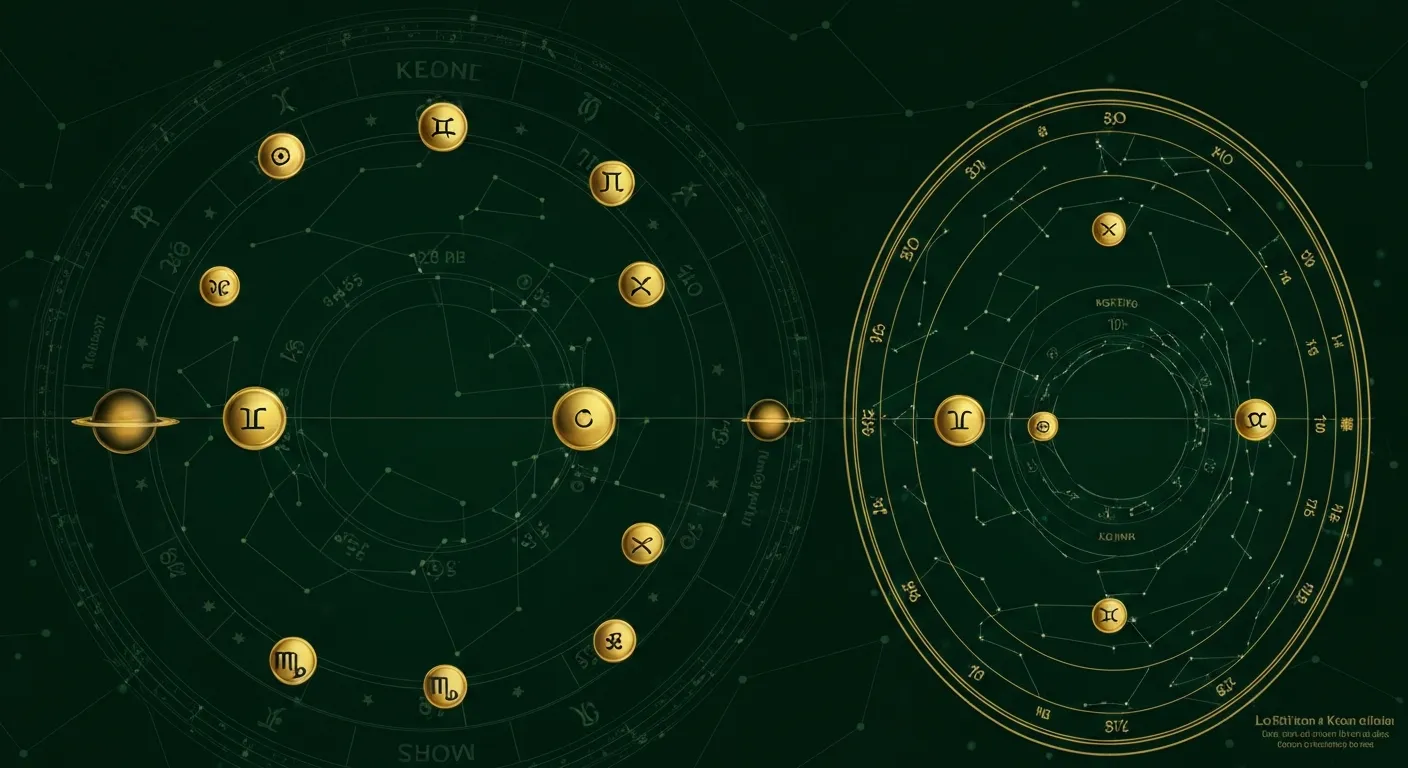
The most fundamental difference is the zodiac itself. Western astrology uses the tropical zodiac, which is fixed to the seasons — Aries always begins at the spring equinox, regardless of where the actual constellation of Aries appears in the sky. Vedic astrology uses the sidereal zodiac, which is fixed to the actual star constellations.
Due to a phenomenon called the precession of the equinoxes — a slow wobble in the earth's axis that causes the equinox point to shift backwards through the constellations over approximately 26,000 years — the tropical and sidereal zodiacs have gradually diverged. Currently, they are approximately 23-24 degrees apart, a difference called the ayanamsa. This means that if you are a tropical Aries Sun, you are almost certainly a Pisces Sun in the Vedic sidereal system.
This is why many people who explore Vedic astrology for the first time find their sign has changed — and why many report that the Vedic placement feels more accurate.
Moon Sign Primacy
Western astrology centres on the Sun sign as the primary identifier of personality and life themes. Vedic astrology gives primary importance to the Moon sign (Rasi) and the Ascendant (Lagna). The Moon sign reflects the mind, emotional nature, and habitual responses — considered more fundamental to day-to-day experience than the solar identity. The Ascendant describes the physical constitution, the lens through which life is perceived, and the overall trajectory of the incarnation.
Predictive Focus
Western astrology is predominantly psychological and interpretive. Vedic astrology retains a strong predictive dimension, using planetary period systems (Dashas) to time the unfolding of events with remarkable specificity.
The 12 Houses: A Brief Overview
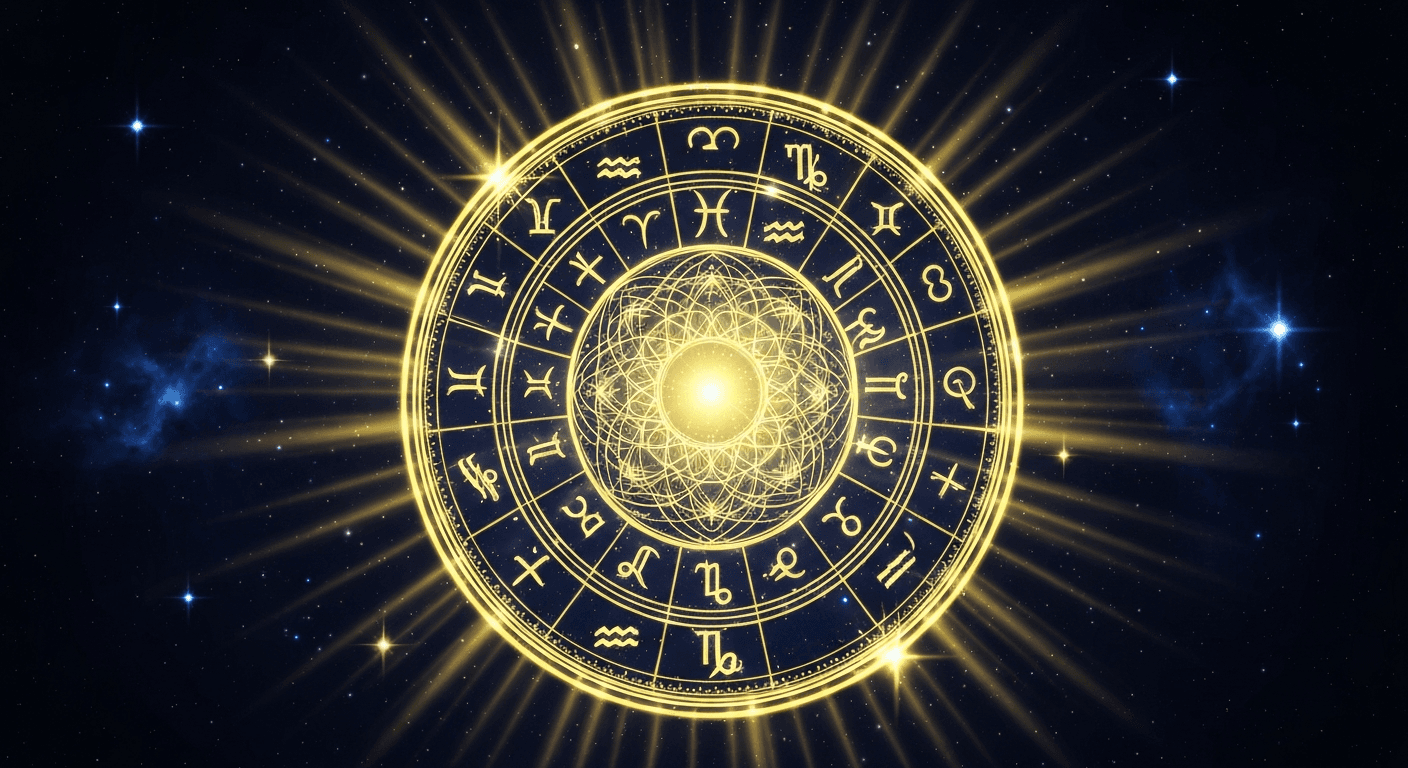
Both Western and Vedic astrology use a twelve-house system in which the circle of the sky is divided into twelve sectors, each associated with a specific domain of life. The houses are numbered from the Ascendant — the degree of the zodiac rising on the eastern horizon at the moment of birth.
- ◆1st House (Lagna): Self, body, identity, overall life direction
- ◆2nd House: Wealth, family, speech, food, accumulated resources
- ◆3rd House: Courage, siblings, communication, short travel, effort
- ◆4th House: Home, mother, comfort, property, emotional foundations
- ◆5th House: Intelligence, creativity, children, romance, past life merit
- ◆6th House: Health, enemies, service, obstacles, daily work
- ◆7th House: Partnership, marriage, business relationships, public self
- ◆8th House: Transformation, longevity, hidden knowledge, inheritance, sudden changes
- ◆9th House: Dharma, higher learning, father, fortune, spirituality, long travel
- ◆10th House: Career, public reputation, authority, life purpose
- ◆11th House: Gains, elder siblings, social networks, fulfillment of desires
- ◆12th House: Liberation, isolation, foreign lands, hidden expenses, spiritual retreat
Each house is occupied or aspected by planets, and the sign occupying each house further colours its expression. The interplay of houses, signs, and planets creates the specific texture of an individual birth chart.
The Nine Planets of Jyotish
Vedic astrology works with nine planets — called the Navagrahas (nine seizers or influencers). These include the seven visible celestial bodies of ancient astronomy plus two mathematical points:
- ◆Sun (Surya): Soul, father, authority, vitality, ego
- ◆Moon (Chandra): Mind, mother, emotions, public, cycles
- ◆Mars (Mangala): Energy, courage, aggression, brothers, property
- ◆Mercury (Budha): Intelligence, communication, analysis, trade
- ◆Jupiter (Guru/Brihaspati): Wisdom, expansion, teacher, dharma, children
- ◆Venus (Shukra): Beauty, pleasure, relationships, luxury, arts
- ◆Saturn (Shani): Discipline, karma, delay, longevity, service
- ◆Rahu (North Node of the Moon): Worldly desires, ambition, illusion, foreign influence
- ◆Ketu (South Node of the Moon): Spirituality, past-life karma, detachment, liberation
Notably, Uranus, Neptune, and Pluto — used in Western astrology — are not part of the classical Jyotish system. Some modern Vedic astrologers incorporate them, but classical practitioners work exclusively with the Navagrahas.
Dasha Systems: Timing the Journey
One of Jyotish's most remarkable features is the Vimshottari Dasha system — a 120-year cycle of planetary periods assigned to each individual based on the Moon's position at birth. Each of the nine planets governs a period of a specific duration: the Sun governs 6 years, the Moon 10, Mars 7, Rahu 18, Jupiter 16, Saturn 19, Mercury 17, Ketu 7, Venus 20.
Within each major period (Mahadasha), each planet sub-rules a proportional sub-period (Antardasha), and within each sub-period, further sub-divisions apply. The result is a precisely structured timeline of which planetary energies are active in your life at any given time — and therefore which themes, challenges, and opportunities are most prominent.
When a Vedic astrologer says "you are in a Saturn Mahadasha with Jupiter Antardasha," they are identifying a specific overlay of Saturn's discipline and delay with Jupiter's expansion and opportunity — a combination that carries particular implications for career, family, and spiritual development during that window.
This predictive dimension gives Jyotish a practical utility that many practitioners and clients find extraordinary: the ability not just to understand personality, but to understand timing.
The Twelve Signs in the Sidereal Zodiac
The twelve signs in Vedic astrology carry broadly similar meanings to their Western counterparts but are understood through Vedic philosophical frameworks and their ruling planets:
Aries (Mesha) is ruled by Mars; Taurus (Vrishabha) by Venus; Gemini (Mithuna) by Mercury; Cancer (Karka) by the Moon; Leo (Simha) by the Sun; Virgo (Kanya) by Mercury; Libra (Tula) by Venus; Scorpio (Vrischika) by Mars; Sagittarius (Dhanu) by Jupiter; Capricorn (Makara) by Saturn; Aquarius (Kumbha) by Saturn; Pisces (Meena) by Jupiter.
Each sign has specific qualities — movable (cardinal), fixed, or dual (mutable) — and belongs to one of the five elements. Signs have natural friendships and enmities with planets, creating a complex web of dignities and debilities that shapes the strength and expression of planets in the chart.
Why Vedic Astrology Matters Today
In an age of extraordinary technological sophistication, the persistence and growth of Vedic astrology speaks to something it addresses that contemporary science does not yet fully account for: the felt experience of timing, of cycles, of being in or out of phase with the larger movement of life.
People turn to Jyotish at moments of major transition — career change, marriage, relocation, the birth of children — and find in it a framework that provides both context for what is happening and guidance for what to do next. Others use it as a regular compass for decision-making, much as one might use a map when navigating unfamiliar territory.
At Trinergy, we offer personalised Vedic astrology consultations that examine your birth chart in depth — your planetary positions, your Dasha timeline, and the specific areas of life most activated in the current period. Whether you are approaching Jyotish for the first time or returning to it with specific questions, a consultation can provide the kind of insight that transforms how you understand your own journey.
Unlock Your Celestial Blueprint
A personalised Vedic Astrology reading reveals your karma, timing, and the cosmic forces shaping your destiny.